







glass panel clean room Innovation Shaping the Future of Biopharma & Life Sciences
Innovation in clean room glass wall and cleanroom glass panel is shaping the next generation of Biopharma & Life Sciences facilities.
Glass Panel Clean Room Innovation Is Reshaping Biopharma Visibility Standards
Supervisory oversight in biopharma production has traditionally meant gowning up and physically entering a suite to observe a process. Newer glass panel clean room designs are changing that, letting quality and production staff monitor critical steps from outside the classified space, reducing both gowning cycles and the contamination risk that comes with unnecessary room entries.
The innovation goes beyond visibility. Advances in clean room glass wall sealing and framing now match the airtightness of solid panel systems, meaning facilities no longer have to trade cleanliness performance for the operational benefits of a transparent partition.
Adoption is accelerating as more facilities recognize the validation benefits too. A cleanroom glass panel system with consistent, documented sealing performance simplifies the requalification process compared with ad hoc window installations retrofitted into existing walls. Where facilities are seeing the most value:
- Reduced gown-and-degown cycles for routine visual checks
- Easier training, since observers can watch procedures without entering
- Better audit optics, with visible process control from corridors
- Simplified requalification versus retrofit window installations
Specifying Glass Systems That Meet Biopharma Airtightness Requirements
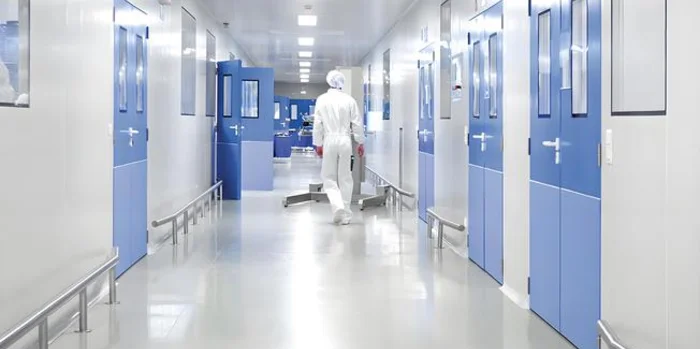
Facility engineers should specify a glass wall clean room system with documented air leakage test data, since not every glazing product on the market has been validated for classified pharmaceutical environments.
Frame detailing at the glass panel clean room junction with adjacent solid walls deserves particular attention, as this is where most sealing failures occur over the life of an installation.
For facilities weighing this investment, the combination of reduced gowning costs and improved audit readiness typically justifies the modest premium that glass partitioning carries over solid wall alternatives, especially in high-visibility production areas.